


Preparing For My Multiday Hike
This has been created after over 3000 km of personal hiking experience, guiding adults, teens and kids and speaking to hundreds of other awesome hikers on the trail.
Even though a multiday hike can give you so much more than it takes, I aim to get you as prepared as possible mentally, physically and emotionally.
Even though it is designed for people who are planning for their LifeTrail hike, it can be adapted to any multi-day hike.
Group Microsoft Teams Video Sessions
LifeTrail is proud to be recognised for our pre-hike preparation. Individual or group video meetings are included in every hike to assist you in being well-prepared and checking out your gear.
Group and individual preparation sessions can involve…
- Goals
- Hike plan
- Respect for everything – Leave No Trace Principles
- Gear & food
- Safety
- Health & Fitness
- Time for questions
Personal Hiking Gear and Clothing
There is something special and life-changing about carrying your life on your back when you depend on it for your life.
Participants plan, supply, and carry their gear in their backpacks. Limited gear is available to hire. The weight of your pack is the same no matter the day; the difference is food and water.
What gear do I need to bring? See LifeTrail’s multi-day hiking gear list.
See the Wet & Cold Weather chapter below for body and gear in more extreme weather.
What Is The Best Hiking Gear For You?
Gear For Hire
Since my practice is located in Denmark, WA, I do not rent out gear myself. Instead, I partner with a trusted service called Hike Hire in Perth (https://hikehire.au/). You can easily rent the exact backpack, tent, and sleeping bag for your hike needs directly from them before coming down to the trail.
Purchase Gear
Do you need to purchase gear? Check out these stores…
Online
- Snowys– (Adelaide) Excellent customer service, good quality & suitable gear, cheapest in Aus., will typically arrive in less than a week.
- Wildearth– (Brisbane) Good quality gear, costs a bit more than Snowys.
- Tip: Buy boots or shoes in-store; comfort and correct sizing is everything
- Facebook groups and marketplace, Gumtree
Shop
- Anaconda(Perth metro) – Suitable gear, inexpensive options, and sound advice can be disappointing; located in several Perth locations. Also sells Mountain Design, a good Aus brand.
- Paddy Pallin(Perth city) – Best quality and expertise, more expensive, but Duke Of Ed receive a 20% discount.
- Kathmandu(Perth metro) – Reliable gear but can be expensive. Shop during their 40% off sales.
- Kmart, Big W & Target sell hiking boots seasonally. It’s better than you think.
Borrow Gear?
I’m going to begin with a borrow gear warning. I have seen too many people who borrow gear that is not suitable just because it’s free and you don’t want to say no to your family or friends. Gear must be appropriate for its use, the conditions and your body. After carrying the wrong pack all day because it’s too big around your hips, broken or designed for travel, you will soon forget to say yes to a free pack. If you can spare the money, buy a suitable, inexpensive pack and sell it online 6 months later if you don’t use it.
Helpful Videos: How to fit your backpack correctly
Water
Minimum daily amount: 2 litres
Minimum carry capacity: 3 litres unless given further advice.
Bibbulmun Track campsites have a rainwater tank with untreated water from the hut roof. I do not treat my water; it is up to you if you treat it or not and bring your method of treating it. The simplest method is water purification tablets.
Hiking Food For Energy
After spending several days on the trail, you never look at food the same way again. It’s no longer comfort food; it’s fuel and energy. Many people tell me all food tastes so good on the trail that your priorities change. Carrying it all on your back inspires you. This is why hikers plan and carry their food.
Tips
Dehydrated food is lighter as you don’t carry the liquid.
Food that is in easy-to-carry packaging to carry back out, there are no bins, e.g., a vacuum pack is better than a tin
- CALORIES – CARBOHYDRATES – PROTEIN – SODIUM are the priority.
- Everything tastes great on the trail.
- Food is fuel.
- Carry in, eat it or carry it out
- Dehydrated ingredients are much lighter; add water at the campsite.
- No tinned foods -They’re too heavy, don’t have enough calories, and create bulky trash.
The specific food you need on a hike may depend on the duration of the hike, km’s each day & how/what you usually eat. Though everything tastes so much better on the trail, your priorities change, and you discover a new appreciation for why you eat.
Food Idea’s
Breakfast
- Oats or muesli with powdered milk
- Muesli or energy bar
Lunch (cold – no cooking)
- Wraps or crackers with, e.g., tuna, peanut butter, Laughing Cow Cheese, Emmental cheese.
- Packaged salads with, e.g., rice, tuna, chicken, beans
- Hard dried meats
Dinner
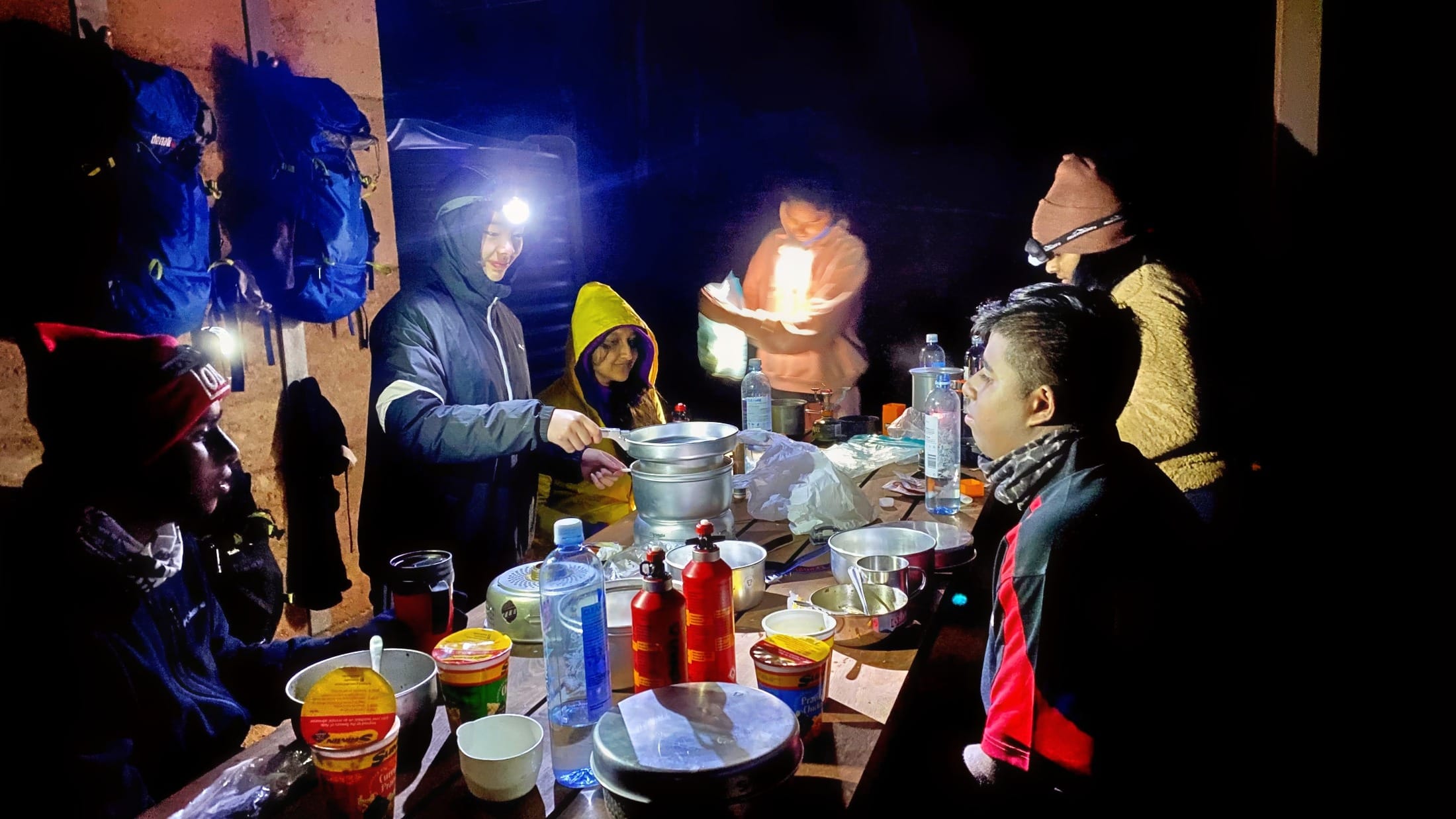
- 2 Minute Noodles with, e.g., dehydrated peas, mushrooms or anything that is light and won’t go off
- Continental pasta meals – Need milk, so use powdered milk. The meal is low fat; add extra virgin oil
- On the first night of a hike, you could eat a home-cooked meal that is practical and won’t go off
- Instant soups
- Dehydrated mashed potato
- Freeze-dried hiker meals (research online or at an outdoor/hiking store)
On-Trail Snacks (or whenever you feel like eating them)
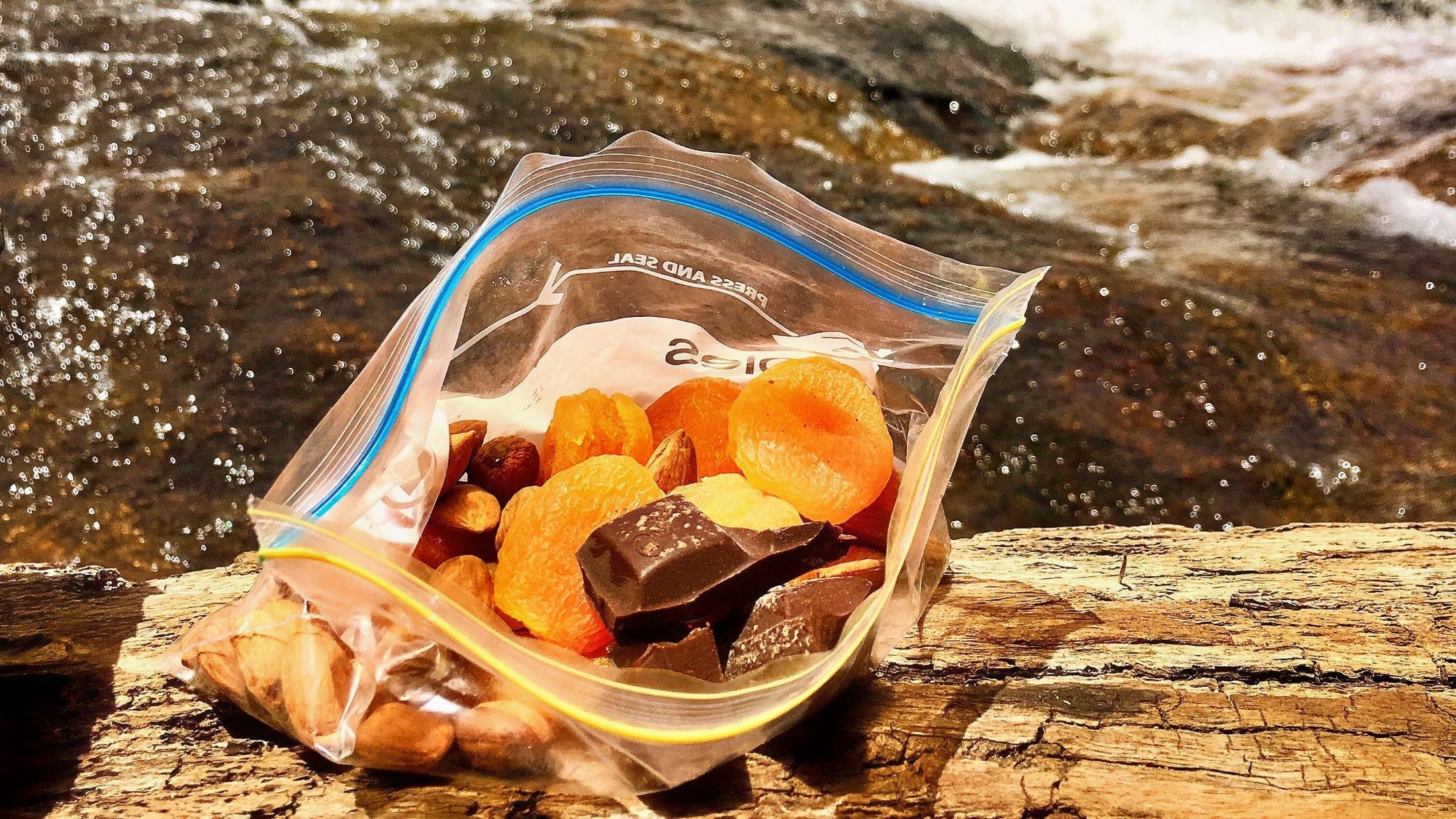
- Trail mix
- Muesli or energy bars
- Nuts
- Dried fruit
- Jerky
- Snickers (most eaten food on trail in the world)
- Peanut M&M’s (they do not melt)
- Honey
How To Keep Hydrated
- Water (campsites have rainwater tanks)
- Electrolyte drink powders (more important in warmer weather)
- Soup
- Chocolate drink with powdered milk (best muscle recovery drink)
- Hot drinks
Plan your daily meals required on a table or bed in breakfast, lunch, dinner, snacks/extra rows.
Helpful Video: Hike Meal Preparation
Hiking Health and Fitness
Unless otherwise stated, all LifeTrail hikes are suitable for beginners. Being super fit and a gym junkie is not required, but some fitness, good health and attitude will go a long way to enjoying yourself on the first and more challenging days on the trail. If in doubt, speak to your GP or health professional.
Check our Hike Difficulty Grading page for tips and guidance.
Tip: Climb steps with a 5kg – 10kg daypack to train
Tip: For a 3-day hike, you can expect your pack to weigh between 13 kgs & 16 kgs, depending on your gear. The only difference between a 2-day and 5-day hike is the food increases and water on warmer days.
Heat Rash / Chafing – On warm, humid days, many people, including myself, experience the excruciating pain of heat rash between their thighs. Wiping the moisture away seems to make it worse. I have found only one way of successfully keeping heat rash away: it isn’t special underwear or talcum powder. They were products that marathon runners use.
There are several on the market; I have tried these two.
Mental Stamina
Hiking is primarily a mental challenge; it isn’t your body that will get you going with a bunch of blisters. It is your state of mind.
Day 2 of a multi-day hike is much more straightforward than day 1. Not because it’s physically more manageable, but it is mentally easier.
It may seem counterintuitive when someone struggles during a hike, but I often get them to lead the group. Something changes mentally, even if they believe the barrier is physical. They complete the leading role feeling more confident, assertive, and distracted from what was bothering them.
Preparing for a hike, asking questions, researching and visualising yourself successfully walking 20 km and climbing a steep, rugged hill is mental work.
In preparation for my 1000 km end-to-end of the Bibbulmun Track, I spent many hours visualising myself doing it, getting past barriers, keeping calm, and making sound decisions.
You may be used to spending a lot of time by yourself at home, suddenly you are amongst 13 other humans, you may or may not already know. You may make lifelong friends, it has happened and have the most fun.
Real example: Ella (15) told me after a 5 day hike, it was the first time she no longer felt anxious meeting new people and making new friends, which she did.
WARNING – On completing your first guided 3-day multi-day hike and your first solo overnight hike, don’t underestimate how much it could affect you mentally in a most beautiful way. Be ready!
Wet, Cold, Severe Weather
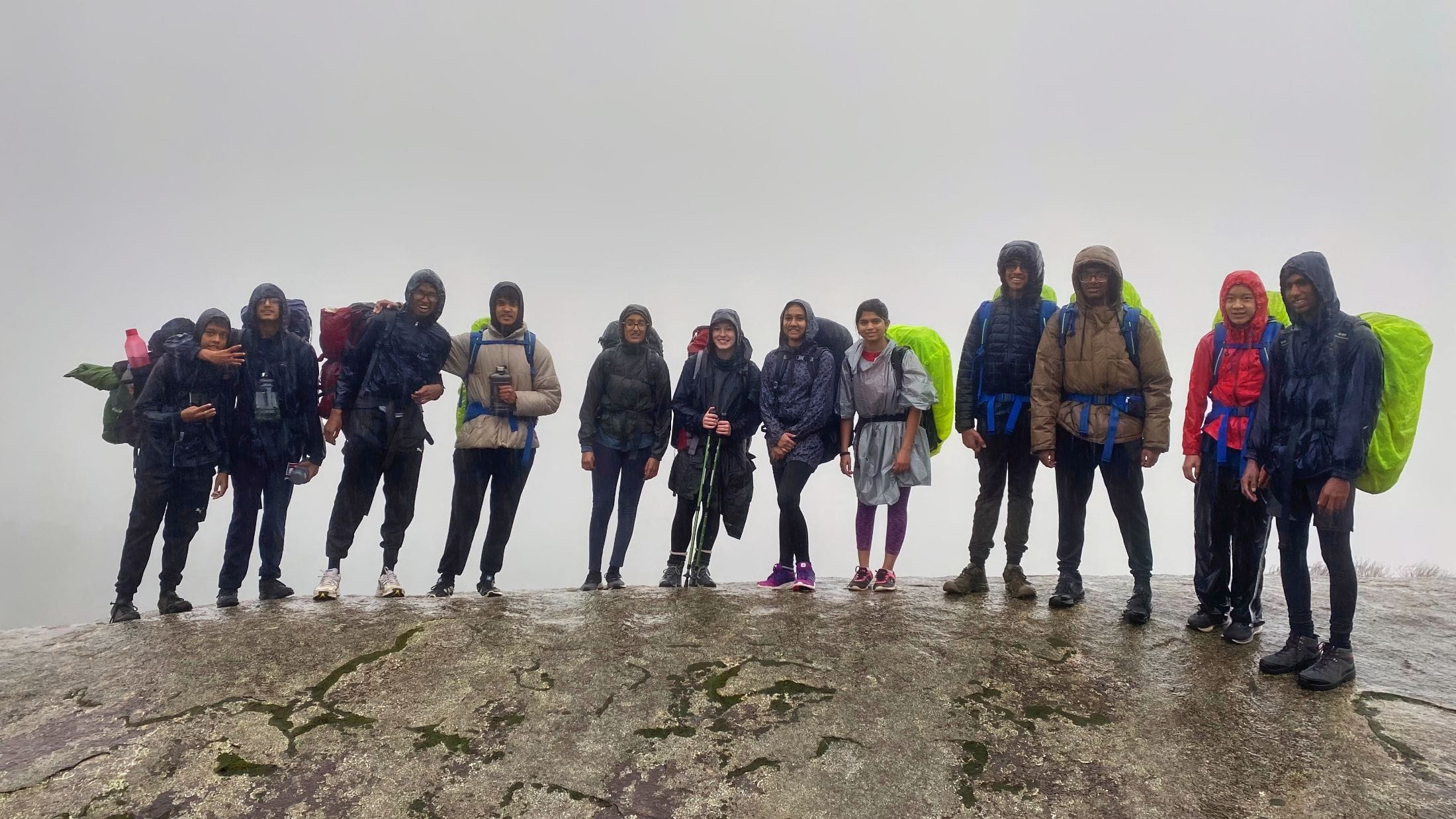
There is a saying amongst hikers. There is no lousy hiking weather, only bad preparation and attitudes.
I have hiked many times solo and guided groups of teens in severe weather, 100 km winds, hail, -5 temperatures. If you think these do not all occur in WA, think again.
The Weather Forecast
Two days before each hike I check weather forecasts using BOM Bureau of Meteorology for the upcoming hike. BUT especially for a 5 or 7 day hike, you must be prepared for anything.
Real Example: During a 2026 5 day teen hike, a severe thunderstorm and heavy rain came right over us on day 2. The forecast was for possible light rain.
The heat is the only weather that will cancel a hike for several reasons. During dangerous levels of dehydration, you must carry a lot more water, and as soon as DFES gives a region a Very High fire danger rating, entering a national park or reserve in that area is banned.
Most of us who have completed some multi-day hiking understand the balancing act of clothing to bring or not to bring. Cold and wet weather can require a rain jacket, thermals, extra socks, beanie, and gloves.
Protecting yourself and your gear is all about Layers in constant &/or heavy rain, wind or cold. It is all about choosing the correct layer in the correct situation.
Backpack layers
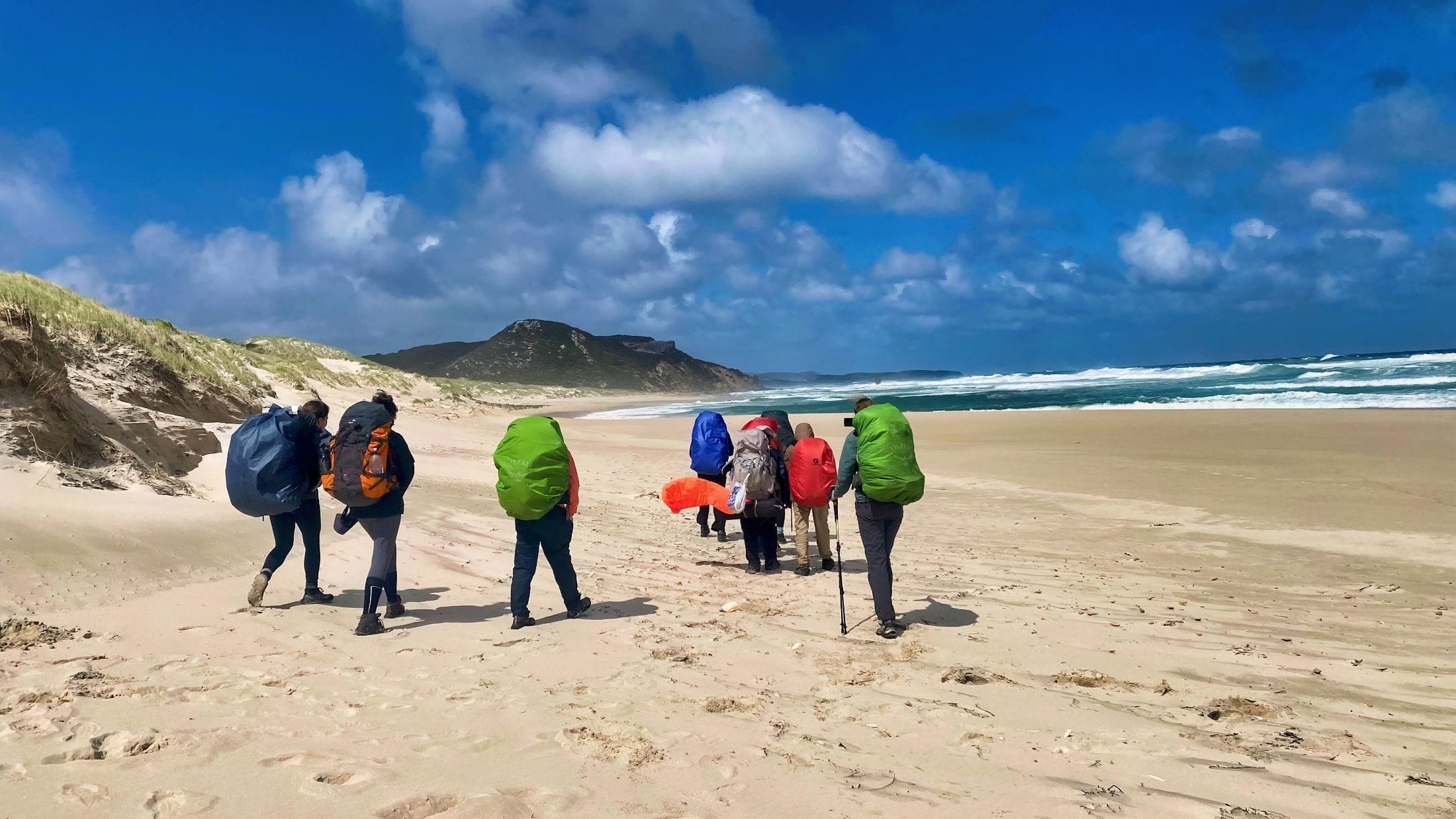
Layer 1 is your pack cover, which protects everything (can be hard to put on if you have gear outside your back)
Layer 2 is your backpack, which is not that great at keeping gear dry; it’s there anyway.
Layer 3 is a pack liner, which is a solid but flexible bin liner that will line the inside of your pack and protect everything inside of it
Layer 4 is your dry sacks or strong plastic bags to have essential items dry
- sleeping bag
- sleeping mat
- camp or spare (emergency) clothing
- technology
Body layers
Layer 1 is your hiking and camp/sleep clothes; both are cared for very differently.
- Hiking clothes will become wet, and that’s ok.
- Camp/sleeping clothes must stay dry.
Layer 2 is a thermal that you only wear when cold and not hiking. You only wear thermals hiking at 0-degree temperatures, or you will quickly overheat. This layer can also be a light fleece or shirt. This layer must be kept dry.
Layer 3 is your fleece. I rarely wear a fleece while hiking. I will wear it hiking first thing in the morning if I am freezing and remove it immediately when my body is warm to prevent sweating.
Layer 4 is your rain jacket or poncho. Whether it is rain or sweat, you will become wet! As long as you are not cold from the wind, you are better off being wet from rain than sweat. A rain jacket, poncho or fleece will make you sweat. Sweating increases dehydration, and you overheat, so you need to drink more and become tired sooner. I only wear my rain jacket when it’s raining, along with cold and wind. An oversized poncho will cover you and your pack, adding another layer to your gear.
FAQ - Questions I am frequently asked
I teach new hikers to look at each piece of hiking gear, food, even water and decide whether the object and the amount is luffy or required.
A warm enough sleeping bag is required for your personal safety but daily spare clean hiking clothes is fluffy, it may feel nice for a short while but it is not required.
2 litres of water on a cool day of hiking is required, 4 litres may be fluffy.
In the end, it's only about the choices you make, and be willing to live with the consequences.
Choose lightweight, energy-rich food high in fats, carbohydrates, sodium and protein that will keep without refrigeration and is simple to prepare.
Good options include oats, wraps, tuna, hard cheese, dried meat, dehydrated meals, nuts, dried fruit and energy bars.
Plan each day’s breakfast, lunch, dinner and snacks before packing, and remember that all packaging must be carried back out. Check out our Hiking food page for further guidance.
For a three-day LifeTrail hike, a fully packed backpack will usually weigh between 13 and 15 km's, including food and water. Your final pack weight will vary on your gear, and how much water you need to carry. Correct backpack fitting and removing unnecessary items can make as much difference as the actual weight. Learn more at our Preparing For My Multiday Hike and Multiday Day Hike Gear List Pages.